
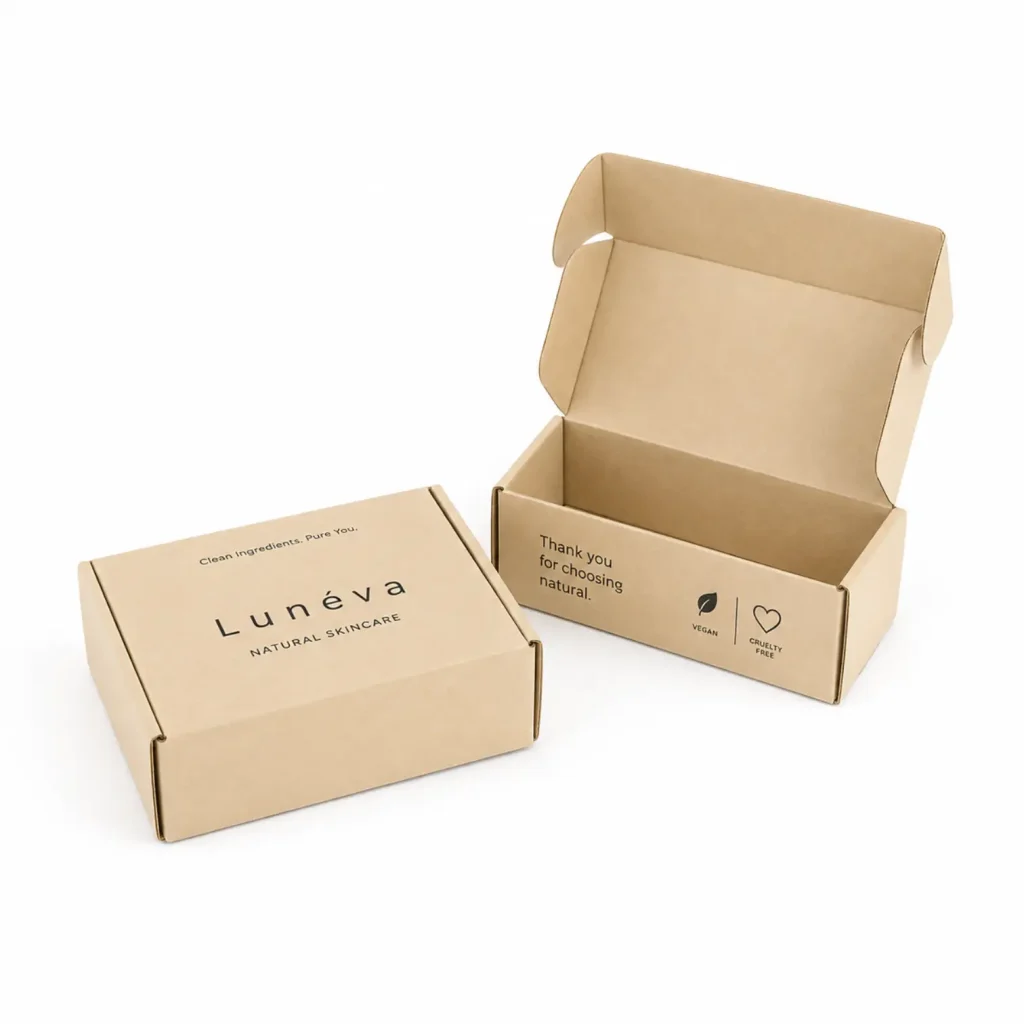
| Quick answer: Kraft soap packaging builds consumer trust because its unbleached texture, visible fiber, and lack of glossy coatings give shoppers something synthetic packaging can’t fake — tangible proof of a simpler, lower-impact manufacturing process. Where plastic-look “eco” boxes rely on printed claims alone, kraft packaging lets people see and feel the difference, which is exactly why it survives the greenwashing skepticism most shoppers now apply by default. |
Why American Shoppers Have Stopped Believing Green Labels
Walk down any personal care aisle in 2026 and you’ll notice something has shifted. Shoppers no longer take a leaf icon or the word “natural” at face value. Years of vague claims, “eco-conscious,” “earth-friendly,” “green choice” — printed on plastic-laminated boxes have trained consumers to question packaging before they trust it.
This is consumer skepticism toward eco claims in action, and it’s not irrational. The Federal Trade Commission’s Green Guides exist specifically because so many brands made unverified green claims with no certification or substance behind them. When a box says “sustainable” but feels and looks identical to standard plastic packaging, the brain registers a mismatch. That mismatch is what shoppers now call greenwashing, and they’re catching it fast, often within the first three seconds of holding a product.
This is also where most brands lose the sale without realizing why.
The 5-Second Authenticity Check We Call the “Touch Test”
After years of fielding packaging questions from clients, we’ve noticed shoppers run an almost identical mental checklist before they trust a “green” product. We call it the Touch Test, and it explains spotting greenwashing better than any marketing theory:
- Does it look raw or processed? Bleached white, glossy boxes read as manufactured. Unbleached kraft reads as untouched.
- Does it feel fibrous or slick? A rougher, paper-like texture confirms biodegradable material; a smooth, laminated finish suggests plastic coating.
- Is there a certification mark? Shoppers increasingly look for FSC-certified packaging or similar third-party sustainability certification, not just brand promises.
- Is plastic hiding underneath? A kraft box wrapped in a plastic window or shrink film fails instantly — it’s eco-label trustworthiness undone in one layer.
- Does the claim match the material? If a box says “100% recyclable” but uses mixed laminates, the claim collapses under inspection.
A box that passes all five earns trust before a single word of marketing copy is read. That’s the power of authentic eco brands — the packaging does the convincing, not the slogan.
Why Kraft Packaging Works
Kraft material succeeds where printed claims fail because it operates on attributes shoppers can verify themselves, not just attributes they’re told to believe.
| Trust Attribute | Mechanism | Consumer Perception |
| Visual Transparency | Unbleached, raw paper texture | Signals an authentic, unpolluted manufacturing process |
| Tangible Tactility | Rougher, fibrous surface feel | Confirms the material is biodegradable rather than synthetic |
| Material Integrity | Eliminates the need for plastic wraps | Delivers on the environmental promise visually, not just verbally |
This is packaging as a trust signal in its purest form. Recyclable kraft paper packaging doesn’t need a paragraph of justification because the material itself is the proof. Plant-based packaging materials and post-consumer recycled (PCR) content add further substance, but the first impression — the one that happens before a customer reads a single ingredient — comes from how the box looks and feels in hand. That’s first impression packaging psychology, and it’s largely out of a brand’s control unless the packaging itself is built right.
“Recyclable” vs “Biodegradable” vs “Compostable”: What Brands Actually Mean
One of the biggest sources of misleading environmental marketing is brands using these three words interchangeably. They are not the same, and shoppers who know the difference trust brands more when the labeling is precise.
| Claim | What It Actually Means | Common Misuse |
| Recyclable | Can be processed by existing recycling infrastructure | Claimed even when local facilities don’t accept the material |
| Biodegradable | Breaks down naturally over time without chemical processing | Used with no timeframe, making the claim unverifiable |
| Compostable | Breaks down into non-toxic, nutrient-rich material under composting conditions | Confused with biodegradable despite stricter requirements |
Unbleached kraft paper genuinely satisfies all three under most conditions, which is part of why it has become the default choice for brands serious about sustainable packaging regulations rather than surface-level marketing.
What This Means for Brand Owners Building Trust Through Packaging
If you’re building or scaling a soap or skincare brand, packaging is no longer a back-end logistics decision — it’s a front-line trust decision. A few things matter more than they used to:
Consumers increasingly factor in willingness to pay for sustainable packaging, particularly among Gen Z and millennial sustainability expectations, where studies have repeatedly shown shoppers will choose a verified eco-friendly option over a cheaper, ambiguous one. Supply chain transparency and ethical sourcing disclosure are also becoming expected rather than exceptional — brands that show how their packaging is made build brand credibility in retail faster than brands that simply claim it’s “green.”
This is also where eco friendly branding earns repeat purchase and brand loyalty. A customer who unboxes a product and instantly registers authenticity is far more likely to return and to tell others — than one who has to take a label’s word for it.
How We Apply This at Soap Boxes Wholesale
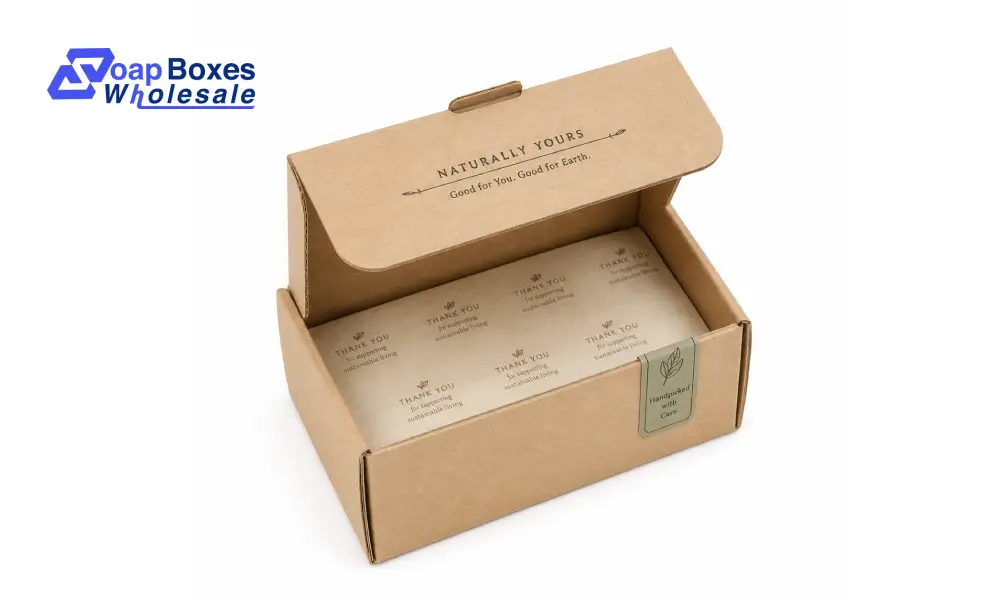
This is exactly why our kraft soap boxes are built on unbleached, FSC-certified material with no plastic lamination hiding underneath the surface. For brands that want shoppers to see the product without sacrificing that raw, authentic exterior, our kraft soap boxes with windows keep the same trust signals intact while adding shelf visibility.
Beyond soap, the same principles apply across our full range of custom soap boxes and soap display boxes, all designed around the same idea: packaging that proves its claims rather than just printing them.
Green Packaging Trends Worth Watching in the US Market
A few shifts are shaping where consumer trust packaging is headed next. Minimalist packaging design is replacing busy, claim-heavy boxes, since less printed text often reads as more confident and less defensive. Soy-based or water-based inks are becoming a quiet differentiator, since traditional petroleum-based inks undercut a box’s sustainability claims even when the paper itself is kraft. And corporate sustainability reporting (ESG) is increasingly expected even from small and mid-sized brands, not just large corporations, as customers research companies before purchasing.
Circular economy packaging — material designed to be reused, recycled, or composted rather than discarded — is also moving from a niche concept to a baseline expectation, particularly as carbon footprint labeling becomes more common on product pages.
The Bottom Line
Shoppers in the US have gotten good at spotting greenwashing because they’ve been burned by it repeatedly. Words alone no longer close that trust gap. What does close it is packaging that can be seen, felt, and verified — kraft material that doesn’t need a paragraph of explanation because the box itself is the evidence.
If your packaging is still asking customers to trust a claim instead of letting them see the proof, that’s the gap worth fixing first. Get a free quote and we’ll help you build packaging that earns trust on sight, not just on paper.


