
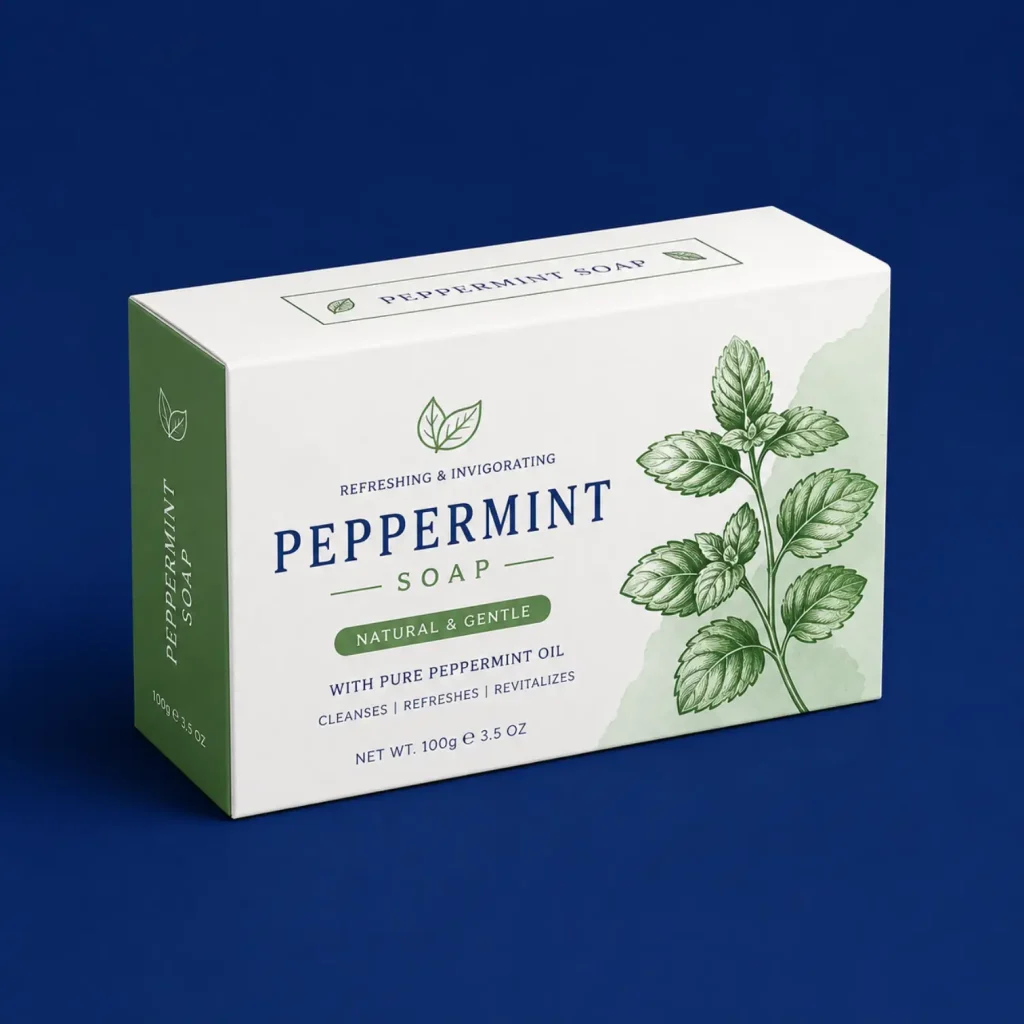
A packaging guide from Soap Boxes Wholesale
| In short: Packaging protects peppermint soap by shielding it from the four things that break it down fastest — light, air, moisture and heat. The right box slows the loss of menthol scent, stops the bar from sweating, and keeps menthol soap’s cooling and antibacterial properties intact for far longer than storage alone allows. |
Soap Boxes Wholesale designs and prints soap packaging for brands across the USA, and one question lands in our inbox more often than almost any other: why does a bar of peppermint soap smell so vivid on day one, then fade to almost nothing a few months later? The soap recipe is rarely the problem. What happens to that bar between the curing rack and the bathroom shelf is where most of the damage actually occurs — and packaging is the part of that journey soap makers tend to overlook.
This guide breaks down exactly what causes peppermint bar soap to lose its benefits, and which specific packaging decisions counter each cause. No vague “keeps it fresh” claims — just the mechanics, and what to do about them.
| TALK TO OUR PACKAGING TEAM |
The Hidden Reasons Peppermint Soap Loses Its Benefits
Peppermint bar soap earns its reputation from the menthol content in Mentha piperita, the plant hybrid that peppermint essential oil is steam-distilled from.
That distillation process concentrates the same volatile compounds responsible for the cooling sensation, the sharp aroma, and much of the antibacterial activity people buy the soap for.
All of that makes the soap chemically active — and chemically unstable once it meets the wrong conditions, particularly in oil-heavy, cold-process formulas that skip added stabilizers such as natural antioxidants or tocopherols.
Oxidation From Air Exposure
The moment a bar sits uncovered, its oils begin reacting with oxygen in the air. This oxidation process slowly restructures the oil molecules, which is why a bar left unwrapped on a shelf smells noticeably weaker within weeks, while a properly packaged one holds its scent for months. Left unchecked in oil-rich bars, this same process can eventually tip into rancidity — a flat, greasy smell that’s easy to notice and hard to reverse.
UV Light Breaking Down Menthol
Ultraviolet light doesn’t just fade the color of natural soap — it breaks the chemical bonds in menthol and other aromatic compounds. Bars displayed under shop lighting or near a window lose potency faster than bars kept in shaded, opaque storage, even when temperature and humidity are otherwise identical.
Evaporation of Volatile Oil Compounds
Essential oils are volatile by nature, meaning they turn to vapor at room temperature. This is why the scent of this natural soap often fades well before the bar itself is used up — the aromatic compounds simply evaporate into the air around it, particularly in warm or loosely sealed environments.
Moisture Causing the Bar to Sweat and Soften
Natural soap contains glycerin, a humectant that actively draws moisture from the surrounding air. In humid conditions, this causes the surface of the bar to soften, sweat, or develop a slick film — changes that affect both how the soap performs and how long it lasts on a shelf.
Timing matters here too. Freshly cut cold-process soap still needs breathable packaging for its cure time — usually several weeks — since sealing a bar before saponification has finished traps moisture rather than keeping it out. Airtight protection is something to add once curing is complete, not before.
Individually, none of these processes happen overnight. Together, and left unmanaged, they’re the reason a peppermint bar that smelled sharp and cooling at the point of sale can feel flat and ordinary within a single season.
Real-World Proof: Peppermint Castile Soap and Familiar Brands
Shoppers search for this product in different ways — peppermint bar soap, soap peppermint, or by specific formats like peppermint castile soap — but they’re all chasing the same cooling, invigorating benefit, and all of them are affected by the same degradation pathways described above.
This isn’t theoretical. Anyone who has used peppermint castile soap — the liquid, oil-based soap popularized by brands like Dr Bronner’s peppermint soap — has likely noticed the scent softening the longer a bottle sits open.
Castile-based formulas lean heavily on essential oil concentration rather than synthetic fixatives, which makes them especially sensitive to light, air and evaporation. Their firm footing in the natural skincare market also means buyers expect the product to stay exactly as potent as the label promises.
The same principle applies to bar soap. Whatever the peppermint soap uses — a daily aromatherapy ritual, morning-routine freshness, or a gift bar sitting in a drawer for weeks before it’s opened — the amount of protection the bar needs scales with how long it sits before use.
A bar sold and used within days needs less protection than one destined for retail shelf life, subscription boxes, or gifting, which is exactly where packaging choices start to matter more than the formula itself.
The Damage-to-Defence Framework
Every degradation pathway above has a direct packaging countermeasure. This is the pairing we use with our own soap clients to decide what a box actually needs to do, beyond looking good:
| What Damages It | Why It Happens | What Protects It |
| Light exposure | UV rays break down menthol and aromatic compounds, fading scent and color | Opaque or UV-resistant board |
| Air exposure | Oxygen reacts with the soap’s oils, driving oxidation and dulling fragrance | Tight-fold construction or a sealed liner |
| Moisture & humidity | Glycerin draws in ambient moisture, causing sweating and softening | Moisture-resistant coating or lamination |
| Heat & temperature swings | Warmth speeds up evaporation of volatile oil compounds | Stable storage material, avoided thin plastic wrap in transit |
None of these need to be applied in isolation. A well-specified soap box typically addresses two or three at once — a kraft board with a moisture-resistant coating, for instance, tackles humidity and adds a degree of light-blocking in a single material choice, which also helps with overall fragrance retention.
Choosing Packaging That Actually Protects Peppermint-Infused Soap
Once the mechanism is clear, choosing packaging becomes a far more practical exercise. A handful of decisions matter more than the rest:
• Board weight and opacity — thicker, fully opaque board blocks more UV than thin or translucent stock, which matters most for soap on display for extended periods.
• Coating type — a moisture-resistant or laminated finish adds a genuine humidity barrier, not just a glossy look, and is worth specifying rather than assuming.
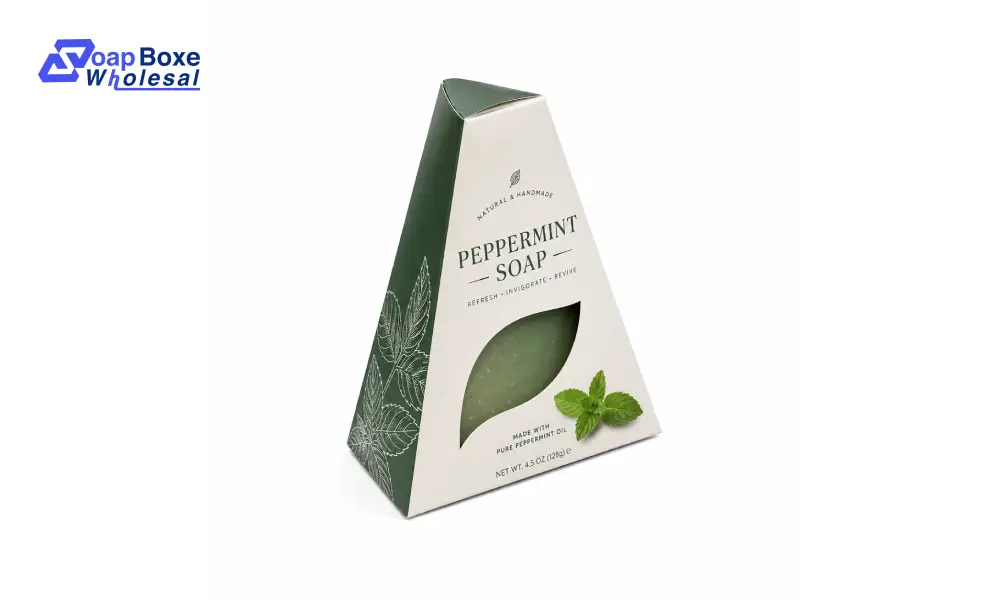
• Window cutout versus solid box — window boxes sell the bar visually but let in light; solid boxes protect better but rely on strong print design to sell the product unseen.
• Liner or insert options — a simple paper liner or snug-fit insert reduces the airspace around the bar, slowing both oxidation and evaporation at little extra cost.
Sustainability is worth building in from the same list, not treating separately: FSC-certified, biodegradable board delivers the protection above without working against a brand’s environmental claims, which matters increasingly to US buyers of natural, handmade soap. Any material in direct contact with the bar should also be food-grade or skin-safe, and free of inks or coatings that could transfer onto the soap itself.
Soap Boxes Wholesale’s Experience With Soap Packaging in the USA
We’ve produced Kraft Soap Boxes, herbal-blend packaging, and handmade soap boxes for small-batch US soap makers selling everything from lavender to peppermint ranges, and the pattern is consistent: brands that specify coating and board weight around how the soap will actually be stored and sold see far fewer customer complaints about faded scent than brands that choose packaging on looks alone.
It’s a small specification decision with a disproportionate effect on how the product performs after it leaves the workshop.
| DESIGN YOUR SOAP PACKAGING WITH US |
Quick Answer: Does Packaging Really Affect Peppermint Bar Soap’s Scent?
Packaging is one of the most significant factors in how long mint soap holds its scent and cooling effect. Opaque, moisture-resistant packaging with a snug fit slows the light exposure, oxidation and evaporation that cause the soap to fade, while thin, clear, or loosely fitted packaging speeds all three up.
The same logic extends beyond peppermint. Brands running a wider herbal or botanical line often specify similar protection across the board — Herbal Soap Packaging built around these same principles applies just as well to lavender, tea tree, or other essential-oil-led soaps.


