

| The short answer: Most bath bombs arrive damaged because sellers choose the wrong box size, skip protective inserts, and use void fill that shifts during transit. The result? Crumbled product, 1-star reviews, and refund requests that eat into your margins. This guide breaks down every common bath bomb packaging mistake and shows you how to fix each one before your next shipment leaves the door. |
| 🛡️ Stop the Damage Before It StartsGet a Free Quote on Custom Bath Bomb Boxes → |
Why Bath Bomb Packaging Damage Is More Common Than You Think
You packaged your bath bombs carefully. You wrapped each one in tissue paper, sealed the box, and handed it to USPS or UPS with confidence. Two days later, a customer emails you a photo — crumbled powder at the bottom of a box that looks perfectly intact on the outside.
This scenario plays out daily for thousands of Etsy sellers, small batch producers, and growing bath brand owners across the US. And the frustrating part? The damage rarely happens because of rough handling alone. It almost always traces back to a packaging decision made long before the box ever shipped.
According to packaging industry data, fragile bath and beauty products account for a significant portion of damage-related returns in the handmade goods category. The fix isn’t expensive — but it does require understanding exactly where things go wrong.
The 6 Bath Bomb Packaging Mistakes That Cause the Most Damage
Mistake #1 — Wrong Box Size (Too Big or Too Small)
Box size is the single most overlooked variable in bath bomb packaging. When your bath bomb box is too large, the product shifts, rolls, and collides with the walls during transit. When it’s too tight, pressure from the cardboard can crack the surface.
The sweet spot is a box where the bath bomb fits snugly with no more than half an inch of clearance on each side — enough room for a custom insert or light void fill, but not enough for the product to move freely.
Explore our full range of bath bomb boxes in sizes built specifically for standard and oversized bath bombs, so you never have to guess what fits.
Mistake #2 — No Insert or Padding Inside the Box
A bare cardboard box offers almost no protection against the vibration that happens over hundreds of miles of road transit. Bath bombs are dense but brittle — the baking soda and citric acid mixture that creates that satisfying fizz also makes the product vulnerable to surface fractures under stress.
A custom-cut insert — whether it’s foam, pulp, or rigid cardboard — holds the bath bomb in a fixed position. It eliminates movement entirely, which is the root cause of most transit crumbling. Sellers who make the jump from loose-fill to custom inserts consistently report a drop in damage complaints.
Mistake #3 — Using Tissue Paper as the Only Protection
Tissue paper is a presentation layer, not a protective layer. It compresses almost immediately under pressure and provides no real cushioning during drops or vibration. Many sellers use tissue paper because it looks beautiful at unboxing and that’s perfectly fine but it has to sit on top of a proper structural solution, not replace one.
Mistake #4 — Choosing Lightweight Cardboard for Shipping
Standard retail packaging and shipping packaging are not the same thing. A thin cardboard box suitable for store shelf display will flex and compress when stacked in a delivery truck. For shipping bath bombs, corrugated cardboard, specifically single-wall or double-wall corrugated — is the right choice. It resists compression from stacking and absorbs impact far better than rigid chipboard.
If you want eco-friendly appeal alongside structural strength, kraft bath bomb boxes made from corrugated kraft stock combine both qualities. They’re a favourite among US Etsy bath bomb sellers who want sustainable packaging that actually survives the mail.
Mistake #5 — Skipping Shrink Wrap or Moisture Sealing
Bath bombs react with moisture. Humidity alone — not just water — can trigger a slow, premature fizzing reaction that weakens the product from the inside out. When a slightly degraded bath bomb then goes through transit vibration, it crumbles far more easily than a fully intact one.
A simple layer of shrink wrap or a sealed cellophane bag around the bath bomb, before it goes into the box, creates a moisture barrier that protects product integrity all the way to the customer’s door.
Mistake #6 — Poor Void Fill That Shifts During Transit
Packing peanuts, crumpled newspaper, and loose tissue paper all have one thing in common — they migrate. Over the course of a shipment, the void fill settles to the bottom of the box, leaving the top portion of the product unsupported. By the time the box reaches its destination, your bath bomb may be resting on a thin layer of packing material surrounded by empty space.
Better alternatives include die-cut cardboard inserts, honeycomb paper wrap, or biodegradable kraft paper crinkle fill that compacts rather than shifts. If you’re shipping multiple bath bombs in one box, rigid partitions between each product eliminate the collision risk entirely.
Bath Bomb Packaging: What Works vs. What Doesn’t
| Packaging Choice | Real-World Performance for Shipping |
| Thin chipboard retail box | Compresses under stacking weight — not suitable for shipping |
| Corrugated cardboard box | Resists compression, absorbs vibration — ideal for transit |
| Tissue paper only | Presentation layer, zero structural protection |
| Custom cardboard insert | Eliminates movement — top choice for fragile bath products |
| Loose packing peanuts | Migrates during transit, leaves product unsupported |
| Kraft paper crinkle fill | Compacts in place, provides consistent cushioning |
| No moisture barrier | Humidity can degrade product before it even ships |
| Shrink wrap + sealed bag | Protects against moisture and surface friction |
How to Package Bath Bombs for Shipping: The Right Sequence
Getting bath bomb packaging right isn’t about spending more — it’s about solving the right problems in the right order. Here’s the sequence that works:
1. Start with the right box size. Measure your bath bomb’s diameter and height, then choose a box with no more than half an inch of clearance on each side.
2. Add a moisture barrier first. Shrink wrap each bath bomb individually or seal it in a polybag before it touches any other packaging material.
3. Use a custom insert or partition. A snug-fitting insert made from corrugated cardboard, foam, or pulp holds the product stationary throughout transit.
4. Layer protective void fill around the insert. Even with an insert, kraft crinkle paper or honeycomb wrap around the edges of the box adds a second line of defense.
5. Choose corrugated cardboard for your outer box. Single-wall corrugated is sufficient for individual orders; double-wall is better for multi-unit shipments.
6. Close and seal securely. Use pressure-sensitive tape across all seams — not just the center strip.
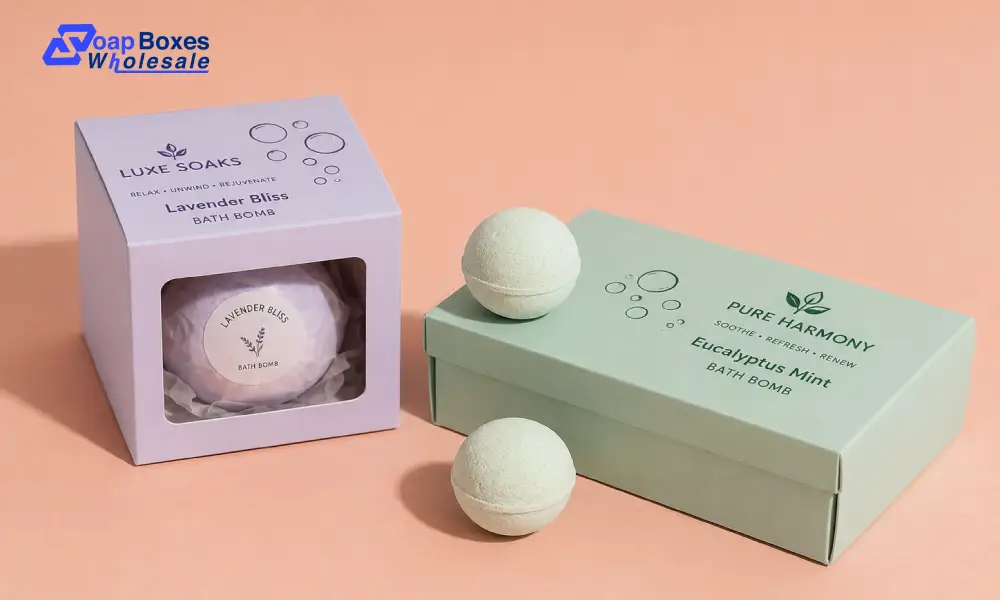
| 📦 Need Packaging That Protects and Impresses?Shop Custom Bath Bomb Boxes Built for US Shipping Standards → |
What US Etsy Sellers and Small Brands Are Getting Wrong Right Now
The rise of handmade bath product sales on Etsy and Shopify has brought a new wave of sellers into the market — many of whom are sourcing packaging reactively, ordering whatever ships fastest rather than what protects best.
The most common pattern we see: a seller launches, gets initial positive reviews, then hits a batch of damage complaints after scaling up shipment volume. The reason is usually that the packaging solution that worked for 20 orders falls apart at 200, because more shipments mean more exposure to rough handling, longer transit routes, and varied weather conditions.
Custom bath bomb boxes built to your specific product dimensions — available through Soap Boxes Wholesale— solve this scaling problem. When your box is designed around your product rather than your product crammed into a standard size, you eliminate the root cause of most transit damage.
It’s also worth noting that proper packaging pays for itself. A single damaged-product refund, including replacement product, reshipping, and the time cost of customer service, typically costs more than upgrading your entire packaging solution for that order.
Eco-Friendly Bath Bomb Packaging That Still Ships Safely
Sustainability matters to US bath and beauty consumers. A 2024 survey found that over 60% of online shoppers consider packaging sustainability when choosing between two comparable products. The good news: eco-friendly and shipping-safe are not mutually exclusive.
Kraft corrugated boxes, soy-based inks, recycled tissue paper, and biodegradable void fill all meet sustainability standards without compromising structural integrity. In fact, virgin kraft fibre corrugated cardboard is among the strongest packaging materials available at any price point.
Our bath soap boxes and bath bomb lines both include FSC-certified kraft options that customers can recycle or compost — giving your brand an honest sustainability story without sacrificing protection.
When a Customer Receives a Damaged Bath Bomb — What to Do
Even with the best packaging, occasional damage happens. How you handle it determines whether a frustrated customer becomes a loyal repeat buyer or a negative review.
• Respond within 24 hours — speed signals professionalism.
• Ask for a photo — it confirms the issue and gives you data to improve your packaging.
• Offer a replacement or refund without requiring the customer to return the damaged product.
• Document each incident — patterns in damage location, carrier, or route often point to a specific packaging gap.
Consistent damage reports from a specific carrier route, for example, might indicate a need to upgrade from single-wall to double-wall corrugated for that shipping zone. The data your customers give you is free packaging R&D.
Ready to Ship Bath Bombs That Arrive Intact — Every Time?
| 🎯 Get Your Custom Bath Bomb Packaging Quote — Free, Fast, No ObligationRequest Your Free Quote Now → |


